Live chat benefits: quick answer
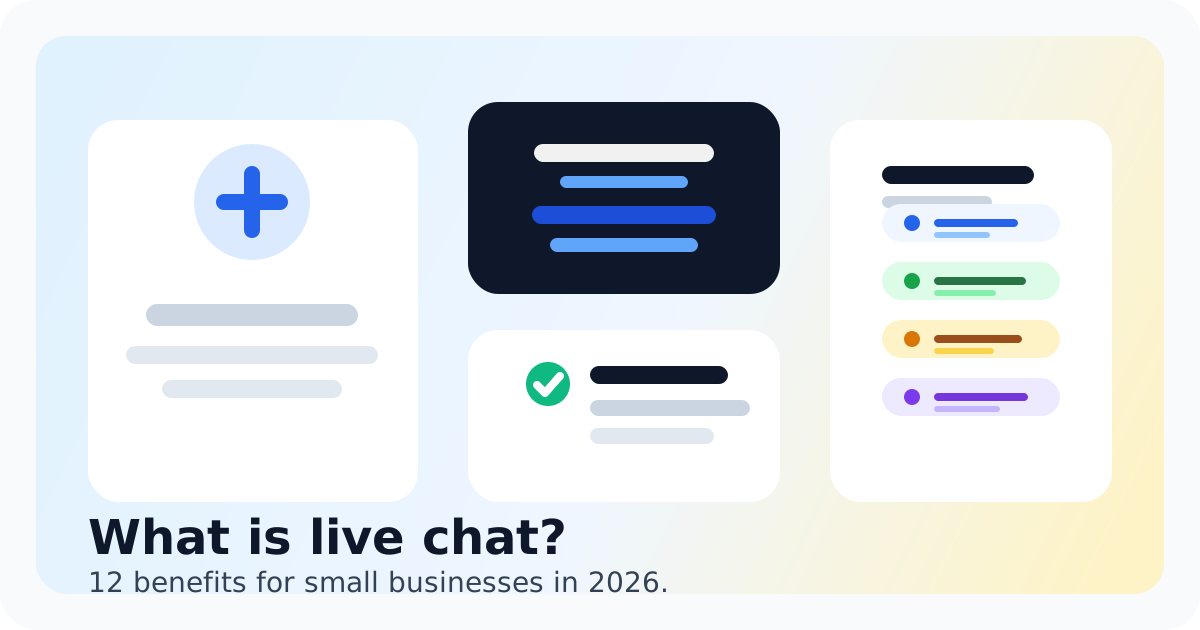
Live chat is real-time website messaging between a business and a visitor. It helps small businesses answer people while intent is still high. The biggest benefits are faster replies, fewer lost leads, better customer context, more useful sales conversations, and a shared support workflow that is easier to manage than scattered email threads.
Live chat software is used for answering product questions, handling support requests, recovering hesitant buyers, capturing after-hours leads, and learning what visitors need before they convert.
- For customers: live chat is faster and easier than waiting for email.
- For teams: a shared inbox, saved replies, and visitor context make replies easier to manage.
- For the business: live chat can turn high-intent questions into sales, bookings, demos, or clearer follow-up.
What live chat is
Live chat is real-time messaging between a business and the people visiting its website. Instead of forcing someone into a phone call or a slow email thread, live chat gives them a faster, lower-friction way to ask while they are already on the site.
Modern live chat often includes a website widget, a shared inbox, visitor context, saved replies, offline capture, and light automation or AI help for the repeat questions.
For a small business, that matters because the job is usually not building a support department. It is answering the question that is blocking the next sale, booking, or conversation.
The real value of live chat is not the widget itself. It is shortening the gap between customer intent and a useful answer.
Why it matters more now
Customers have less patience than they used to. If they cannot get clarity quickly, they often leave. That is true for ecommerce stores, SaaS companies, local services, and any site where a visitor is deciding whether to take the next step.
That is why live chat keeps moving from optional to expected. It helps businesses respond faster without turning every question into a phone call or a multi-message email thread.
The real small-business decision is not whether live chat works. It is whether you choose a lightweight chat-first tool that fits the team you have, or overbuy a bigger platform meant for support ops you do not actually run.
Benefits 1-6: customer experience and team efficiency
- 1. Faster support: visitors get answers sooner than they would through email, and the team can resolve simple questions while the moment still matters.
- 2. Better scalability for small teams: one shared inbox, saved replies, and clearer routing help a lean team handle more conversations without chaos.
- 3. Proactive engagement: chat can appear when someone is hesitating on pricing, product, or checkout pages instead of waiting for the visitor to leave.
- 4. Better customer context: page URL, referrer, prior messages, and session detail make replies more relevant and faster to write.
- 5. Higher customer satisfaction: live chat feels easier because it is convenient, fast, and leaves a written record people can refer back to.
- 6. Better agent productivity and morale: a cleaner workflow with less context switching usually feels lighter than juggling calls, inboxes, and scattered messages.
For a small business, these benefits compound. Faster answers usually mean less frustration, fewer lost conversations, and less stress on the team.
Benefits 7-12: revenue, insight, and scale
- 7. More revenue: many live chat conversations happen before the purchase, not after. That makes chat useful for product advice, objection handling, and cart recovery.
- 8. Lower support costs: chat is often cheaper to manage than phone support, and automation helps reduce the time spent on repetitive questions.
- 9. Better after-hours coverage: offline capture, business hours, and smart follow-up workflows help small teams stay useful without 24/7 staffing.
- 10. Faster response times: a quick first answer is strongly tied to better experience and better conversion outcomes.
- 11. Better insight into customer needs: chat transcripts reveal repeat questions, pain points, and trust gaps that improve copy, product decisions, and support quality.
- 12. Easier scalability: as a business grows, live chat helps absorb more demand without requiring proportional hiring right away.
That is why live chat is no longer just a support channel. It is a practical business system for learning faster, converting more intent, and keeping workload under control.
Why Chatting fits this well
This is exactly where Chatting makes sense. Most small businesses do not need a huge enterprise support stack. They need a customizable widget, a shared inbox, visitor context, saved replies, after-hours capture, and useful automation without help desk bloat.
That is the mistake a lot of teams make. They decide live chat matters, then buy software designed for larger support operations. The result is more admin, more complexity, and a slower team.
- Use Chatting to answer pre-sales and support questions faster from one shared inbox.
- Use Chatting to catch after-hours intent instead of letting it disappear.
- Use Chatting to keep useful visitor context close so replies feel faster and more relevant.
- Use Chatting to learn what customers keep asking so the site gets clearer over time.
Pricing also fits the stage most small businesses are actually in: Starter: 50 conversations/month. Growth starts at $20/month with 3 members included, then $6/member/month.
That makes live chat more than a support feature. With Chatting, it becomes part of how a small business stays responsive, learns faster, and converts more intent without overbuilding operations.
Key takeaway
Live chat is no longer just a support tool. It improves customer experience, increases team efficiency, drives revenue, and reduces the cost of handling the same questions badly.
For most small businesses, the next conclusion is not just live chat matters. It is that a lighter chat-first product like Chatting makes more sense than dragging in a bigger support system too early.
In 2026, live chat is getting much closer to a must-have than a nice-to-have for small businesses that want to answer while the moment still matters.
See what live chat looks like with Chatting
Use Chatting to turn faster replies, better context, and after-hours capture into a manageable workflow for a small team without enterprise overhead.
Start live chat freeFAQ
What is live chat in simple terms?
It is real-time messaging between a business and a visitor on the website. It gives people a faster way to ask questions than email and a lower-friction option than phone support.
What are the benefits of live chat?
The main benefits of live chat are faster support, better customer experience, higher conversion intent, lower-friction sales conversations, useful visitor context, after-hours lead capture, and a shared workflow that helps small teams respond without juggling separate inboxes.
What is live chat used for?
Live chat is used for answering website questions, helping buyers choose the right product or plan, handling quick support requests, recovering checkout or pricing-page hesitation, capturing leads when the team is offline, and spotting repeated questions that should be fixed in the site copy.
What are the advantages of live chat software?
Live chat software gives teams a website widget, shared inbox, saved replies, visitor history, page context, routing, and offline capture in one workflow. Those advantages make live chat easier to run consistently than ad hoc email, phone calls, or scattered social messages.
Is live chat only for customer support?
No. It is also useful for sales questions, product recommendations, checkout hesitation, after-hours lead capture, and understanding what visitors still need before they convert.
Is live chat worth it for a small business?
Usually yes when faster answers can help save leads, sales, or customer satisfaction. The main risk is overbuying software or creating a workflow the team cannot maintain.
Do small businesses need 24/7 live chat?
No. Most need a better after-hours handoff, not round-the-clock staffing. Offline capture and clear reply expectations are usually enough.
Where does Chatting fit?
Chatting fits when a small business wants the real benefits of live chat without taking on enterprise-style support complexity. It is strongest for teams that want a widget, a shared inbox, visitor context, saved replies, and after-hours capture without help desk sprawl.
What if I want live chat benefits without buying a full support platform?
That is exactly the gap Chatting is built for. You can start with starter: 50 conversations/month and move to Growth at $20/month with 3 members included, then $6/member/month if you need more room, without stepping straight into heavier support software.
Recommended next steps
Live chat software for small teams
live chat software for small teams
Live chat software for small teamsZendesk alternative
Switch to Chatting if the team mainly needs live chat, page context, and after-hours capture.
Zendesk alternativeLive Chat ROI Calculator
Plug in your monthly visitors, current conversion rate, and average order value to estimate the impact of faster conversations.
Live Chat ROI CalculatorA website chat widget for startups and small teams
website chat for startups
A website chat widget for startups and small teams